

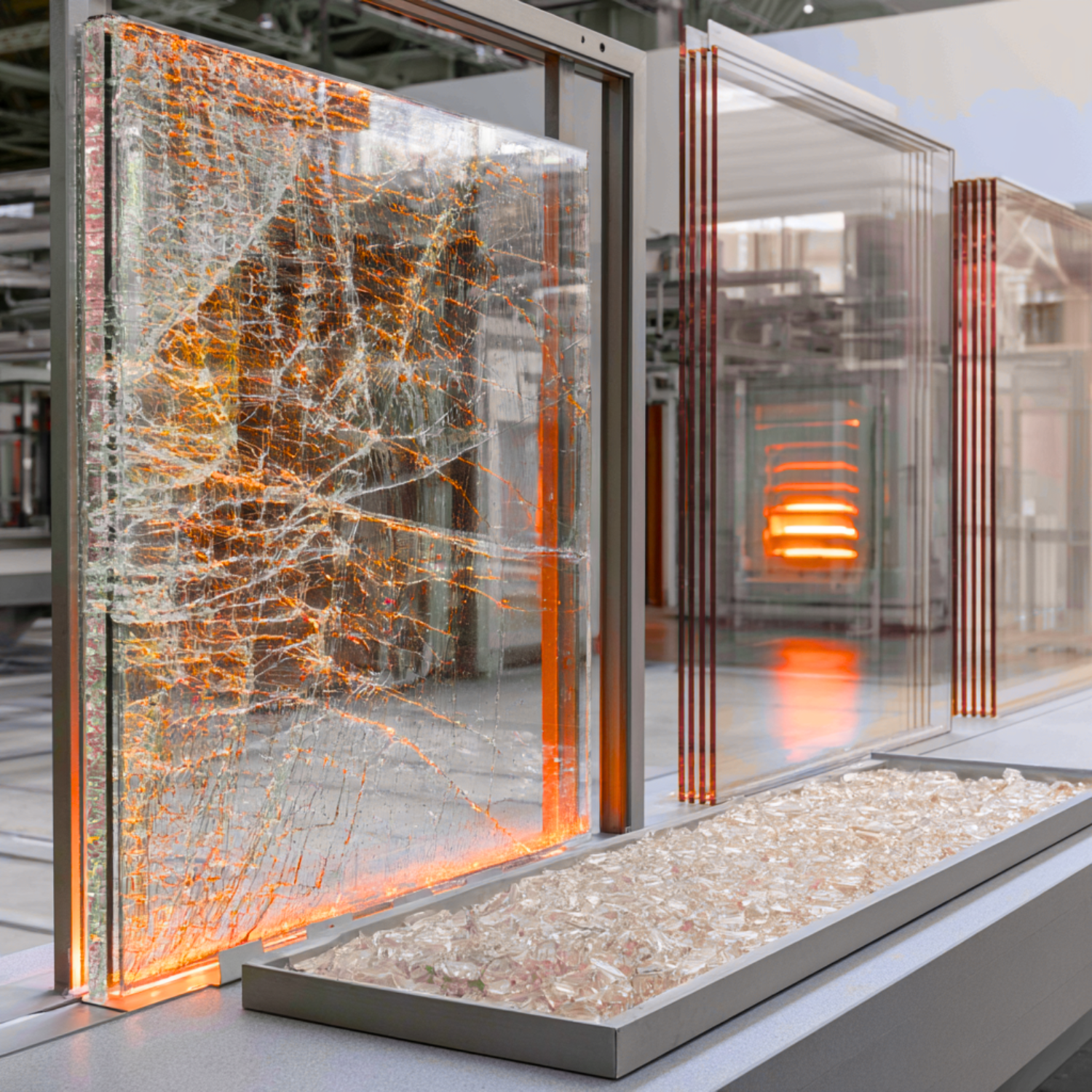
HEAT-TREATED GLASS
Heat-treated glass is processed at high temperatures to improve its resistance to mechanical and thermal stresses. Depending on the cooling method used, the glass can be produced as heat-strengthened glass or tempered glass, each offering different performance levels for architectural, residential, commercial, and industrial applications.
HEAT-STRENGTHENED GLASS
Heat-strengthened glass is produced by heating the glass to more than 600°C and then cooling it gradually to increase its resistance to thermal and mechanical stress. It is mainly used to reduce the risk of breakage caused by temperature differences or thermal loads. Although stronger than ordinary glass, it is not considered a safety glass. When broken, it tends to fracture into larger pieces that usually remain within the frame.
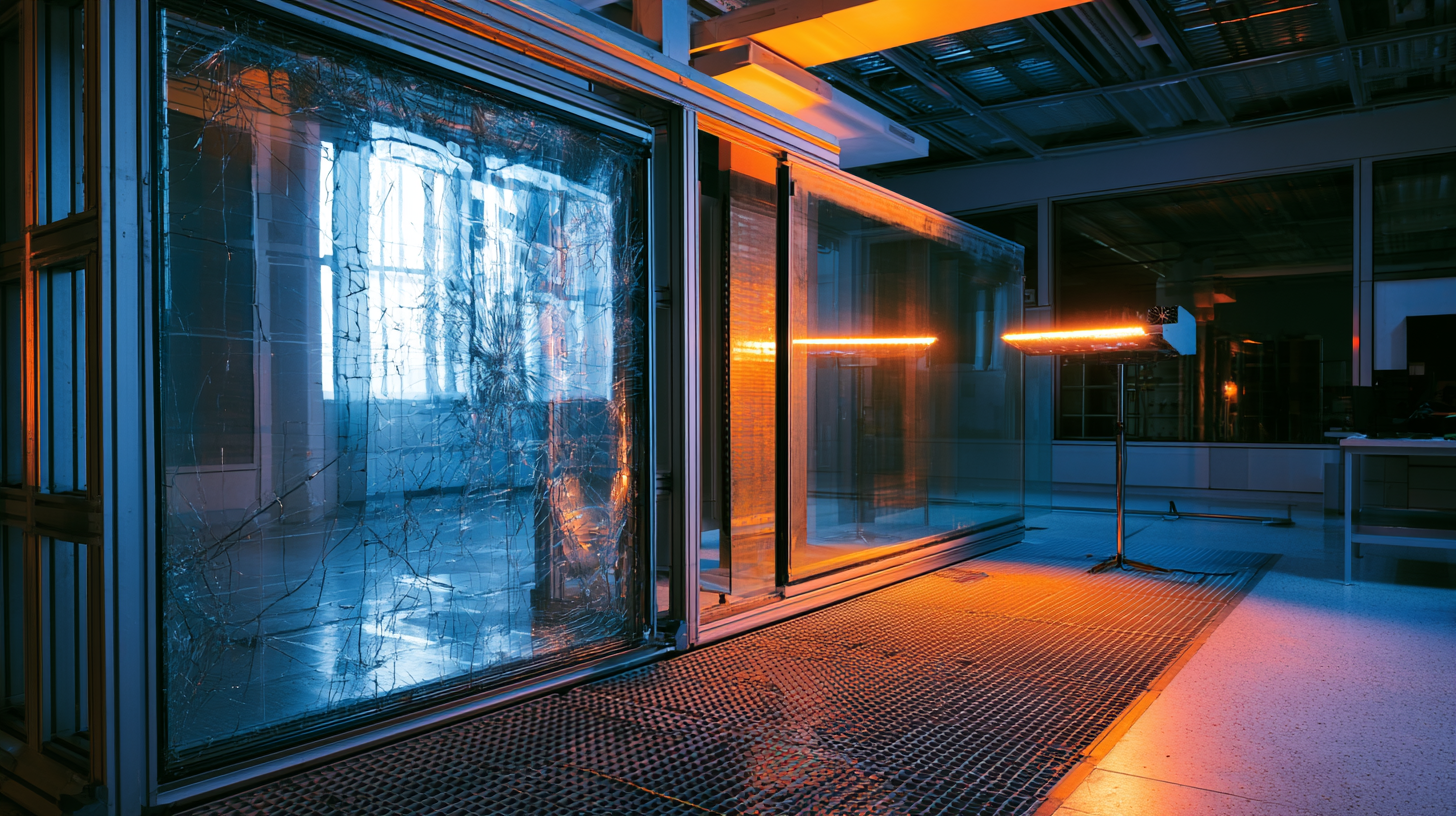
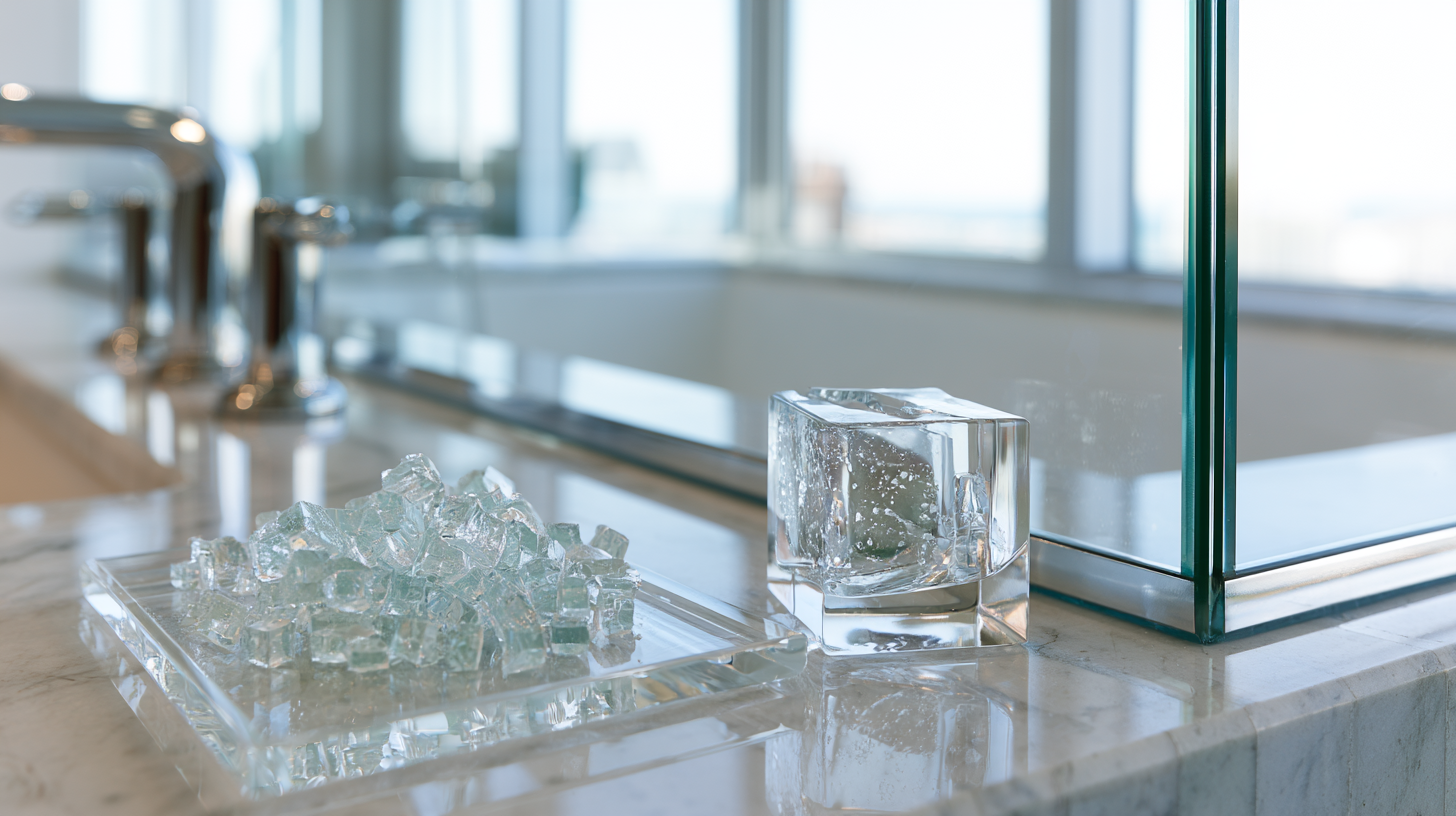
TEMPERED GLASS
Tempered glass is a safety glass produced by heating the glass to more than 600°C and then cooling it rapidly to increase its strength and resistance to thermal and mechanical stress. In case of breakage, it shatters into small, blunt pieces, reducing the risk of injury. Tempered glass maintains the light transmission and energy properties of the original glass, but once tempered, it can no longer be cut or shaped. It can also be used in insulating glass units, coated glass applications, and laminated glass assemblies.


